Search This Blog

Friday, 22 February 2013

Washbasin puzzle

 You have a jug which will carry 7 litres of water, and a washbasin which holds exactly 20 litres. By pouring the contents of the jug into the basin, or by emptying the basin when it is full.

 How can we end up with exactly 4 litres of water in the washbasin?


Solution:

To end up with 4 litres in the washbasin you need to pour in 12 full jugs of water (84 litres in total) emptying the washbasin each time it gets full to capacity.

This is an example of a modular arithmetic problem and it is not a unique solution. Any multiple of 7 which has a remainder 4 when divided by 20 will also be a solution of the problem.

Wednesday, 20 February 2013

Steve Jobs speech


A really interesting speech from Steve Jobs from 1980 about the early days of Apple

Watch it here - link to youtube video


It is easy to critise Steve Jobs but it is undenaible that he was very, very passionate about his industry and was a fantasic and engaging speaker.

Saturday, 16 February 2013

What actually is a Google?

What does the name of the most popular search engine on the web actually mean?


The name is actually a misspelling of the word googol. A googol is the mathematical term for the number:
10,­000,­000,­000,­000,­000,­000,­000,­000,­000,­000,­000,­000,­000,­000,­000,­000,­000,­000,­000,­000,­000,­000,­000,­000,­000,­000,­000,­000,­000,­000,­000,­000,­000
which is a 1 followed by 100 zeroes and as you can see is a very large number.
Though google has now become a noun in its own right the name remembers the company's academic roots at Stanford university.

Source: The Google Story, David A Vise

Friday, 15 February 2013

A logic puzzle

This isn't strictly a maths problem but I still found it fun!


1
1 1
2 1
1 2 1 1
1 1 1 2 2 1

What is the next line of the sequence?

Hints will be posted during the week and the solution posted this time next week.
Hint 1: Try saying each line out loud.
Hint 2: Each line relates to the one above.

Solution:

The next line should be: 3 1 2 2 1 1.
Each line describes in words the line above:
One,
One one,
Two ones,
One two, one one
One one, one two, two ones, one one
So the next line is:
Three ones, two twos, one one i.e 3 1 2 2 1 1

Source: The Google Story, David A Vise

The oldest puzzle in history


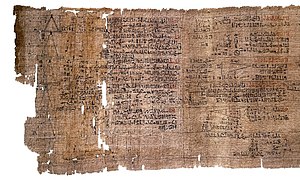
The problem is written on the Rhind papyrus, now housed in the British museum in London, and looks like this:


(For those of you who can't read hieratic, ancient Egyptian, writing) In english the problem reads:
  • Houses 7
  • Cats 49
  • Mice 343
  • Ears of wheat 2,401
  • Hekats 16,807
Total 19607

What does this mean?

The writing alone does not provide many clues as to what the puzzle is. It was noticed that the numbers are 7, 7x7 = 49, 7x7x7 =343 etc. but again this did not provide many clues to the relation between the words and numbers.
It took a stroke of genius from someone studying the papyrus to make a connection between these numbers and the well known riddle "As I was going to St Ives". 
As I was going to St Ives
I met a man with seven wives
Every wife had seven sacks
Every sack had seven cats
Every cat had seven kits
Kits, cats, sacks, wives.
How many were going to St Ives?
However in the ancient Egyptian case the puzzle would read: Seven houses each contains
seven cats. If each cat catches seven mice and if each mouse eats 7 ears of wheat. If sown each ear of wheat would have produced 7 hekats of wheat.

Why is this particular problem important?

This problem is massively important as it is the first recorded example in history of people doing mathematics for recreational purposes. It shows that even 3000 years ago there were people curious about maths and wanted to test their intellect by setting others these sort of riddles.
It is fascinating to think that some of the mathematical puzzles humans complete everyday, for example sudokus, could be studied by future historians in the same way as we study this problem from the past.

Sunday, 10 February 2013

What next for the Apple?

Apple have built a worldwide reputation for producing hugely iconic and stylish products. The company is also famous for its counter culture spirit.
I found the biography of Apple's talismanic leader Steve Jobs inspiring. It is easy see how he led Apple from the brink of collapse to the most valuable and one of the most influencial companies in the world.

 The question is what comes next for Apple?


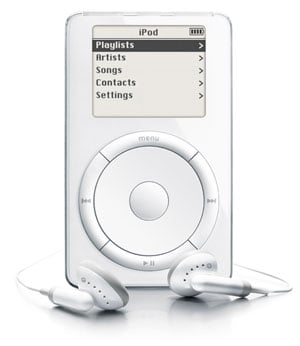
Since the launch of the original iPod in 2001, Jobs launched a string of hugely successful products which revolutionised many different industries. It comes as no surprise that since his death Apple have only evolved these existing products rather than take a bold step into a new area.

Can Apple sustain their dominance?


While the sales of the iPad are hugely impressive they will inevitably slow down overtime. Jobs understood the need for bold innovation to keep Apple on top. Apple have been lucky so far that Microsoft's entrance into the tablet market was a below par product that is unlikely to convince users to swap their iPads for a Microsoft tablet.

A possible iWatch?


I read that it is likely Apple's new innovation may be a watch that will link with a users iPhone or other Apple product to provide the users with features like answering their iPhone and showing texts and reminders possibly using siri to issue commands. While this seems like a useful accessory for your existing Apple products it is hardly as ground breaking as the iPod, iPhone or iPad.
Apple could also be too late getting their product to market with products like the pebble already becoming available and looking like a viable contender containing all the features Apple could put into their product.
As a fan of the unique user experience Apple products offer I hope Apple can rediscover some of the innovative development they possessed with Steve Jobs at the helm.

However, Apple have done this before. For example, there existed other mp3 players before the iPod. Apple took this technology and developed a user friendly and stylish product far superior to everything else on the market.

Saturday, 9 February 2013

How likely actually is it that you will win the lottery?


The fact that you are more likely to get struck by lightning than win the lottery is often told to hopeful lottery players.

How likely is it that your numbers will come up in the lottery?

This can be figured out mathematically by calculating how many possible ways there are of choosing 6 numbers from 49. Without replacing each number after it has been picked.
To do this we use the "nCr"-(number of ways of choosing r items from n) button on a standard calculator. (This uses a more complicated mathematical formula using factorials).

Entering 49C6 you are told there are:

13,983,816 possibilities.

In other words, each set of 6 numbers has about a one in 14 million chance of coming up; not very likely!

Comparitively the chances of being struck by lightning in your lifetime are roughly 1 in 10,000!
So you are over 100 times more likely to be struck by lightning than win the lottery!

Wednesday, 6 February 2013

Card shuffling


Card games and probability are two concepts that go hand in hand


What is the probability that a deck of cards will end up in a specific order after they are shuffled?


To obtain the answer, consider a standard deck of 52 cards and how many choices you have for each position in the deck.
For the first card there are 52 choices (all the cards). Then for the second card, there are 51 choices for each of the 52 choices for the first card (the deck minus the one we know comes first). We then have 50 choices for third and so on.

This produces the solution:


52 x 51 x 50 x 49 x ... x 2 x 1
=8.0658175 x 10^67

And thus the probability of the deck being in a specific order is roughly 1 / (8 x10^67).


This number is so astronomically large that every time you randomly shuffle a deck of card it will be the first time in history that there has been a deck of cards in that order!