Scientists have developed a new technique that could allow a single DVD to store an amazing 1,000 terabytes of data.
Compared to the current size of just 4.7 gigabytes this is an incredibe breakthrough!
Read the full story here
Thursday, 20 June 2013

Saturday, 15 June 2013
Autocorrect fails
23 of the funniest autocorrect fials I've seen on the web:
http://dontpkethebear.com/uncategorized/23-autocorrect-fails-that-might-land-you-on-the-government-watch-lis/
My personal favourite is number 16!
http://dontpkethebear.com/uncategorized/23-autocorrect-fails-that-might-land-you-on-the-government-watch-lis/
My personal favourite is number 16!
Sunday, 9 June 2013
Surprising statistics
What is the most likely way to turn £1 into £100,000 playing the lottery or by playing roulette?

Firstly consider the odds of winning £100,000 on the lottery. Generally, for this to occur the numbers on your ticket must match 5 (out of 6) winning balls and the bonus ball.
The chances of this happening is: 1 / 2,330,636

Next consider betting on a roulette wheel. To go from £1 to £100,000 you would need to place the £1 on a chosen number. This would generate £36 which then needs to be all placed on a single number again and once again to generate £46,656 this can then be placed on red or black to generate the £100,000.
The probability of winnign when the amount is all placed on a single number is 1/37. The probability of each colour coming up is 17/37 for black and red and one 0.
So the chance of the of the scenario described above occuring is 1/37 x 1/37 x 1/37 x 18/37 = 1 / 104120
Surprisingly much better odds than winning on the lottery!
Source: Everyday risks article
Friday, 7 June 2013
This is terrifying
The guardian has been reporting today about documents they have received that has shown the government has had access to massive amounts of information on people without them knowing.
The full article can be found here
Source: The guardian
The full article can be found here
Source: The guardian
Thursday, 30 May 2013
Do the big technology companies dodge tax?
A very big issue at the moment is that of the big technology companies such as Apple and Google not paying enough in tax.
But what is the cause of this debate?
The companies themselves seem to think they are following the law perfectly and are just doing what makes the most sense for their businesses.
The governement seem to be saying that they are unlawfully avoiding paying taxes.
But are the government just blaming them to try and get voters on their side?
The recession has made finances tight for ordinary people and its very easy to point the finger at big business as teh cause of this.
A really interesting article from the BBC who spoke to Eric Schmidt over the issuye can be found here
Source: BBC news
Tuesday, 21 May 2013
XBox one announcement
The announcement of the new XBox one is currently streaming live on the guardian website
Take a look here if you are interested
Source: The guardian
Monday, 20 May 2013

Monday, 13 May 2013
MOOCs
Massive Open Online Courses
"MOOCs are a new and exciting way of learning which are open to all and
best of all they are completely free. All you need is an internet
connection and a positive attitude. The initiative will bring learning
to life and remove the barriers to education for people across the world
– no matter what stage of life they are at."
Quote from this article
The internet has massive potential for anybody, with a bit of initiative, to educate themselves and the universities are doing their best to provide as high quality information as possible.
The best part is that it is free for everyone. People who would never of had the opportunity to learn about something that interests them now have a free and easily available means to do so.
I envisage that in the future these will be used by all different types of people.
Adults wanting to learn new skills for work or just to satisfy their curiosity
Bright young people wanting to learn more than they are taught in schools and students wanting to learn about other areas not just their own course.
Source: University of Sheffield
Sunday, 12 May 2013
Euler's solution for the bridges of Königsberg problem
This links back to the earlier blog post: The bridges of Königsberg
From the diagram it seems like this may be possible. However, after a few attempts using trial and error of different routes you keep ending up having to use an edge more than once.
Graph theory allows the problem to be simplified down to:

The famous mathematician Leonhard Euler came up with necessary and sufficient conditions for a graph to be Eulerian: starting at any vertex you can cross every edge and end up back where you started
(Or, equivalently, the graph can be drawn without having to take the pen off the paper)
Or semi-Eulerian: starting at one vertex you can walk along every edge but end in a different place to where you started.
For a graph to be Eulerian every vertex must have even degree (the number of edges coming out of that vertex).
Using the simplified graph version of the bridges of Königsberg problem we can see that degrees of the vertices are:
(Or, equivalently, the graph can be drawn without having to take the pen off the paper)
Or semi-Eulerian: starting at one vertex you can walk along every edge but end in a different place to where you started.
For a graph to be Eulerian every vertex must have even degree (the number of edges coming out of that vertex).
Using the simplified graph version of the bridges of Königsberg problem we can see that degrees of the vertices are:
a 3
b 5
c 3
d 3
So it is clearly not possible to walk across every edge (bridge) exactly once beginning and ending in the same place or different places.
A natural question is to ask how many edges need to be added to make the graph Eulerian?
Hint: every edge must start and finish at a vertex
Wednesday, 8 May 2013
5/8/13
Today, the 8th of May 2013, when written in the American way of writing dates, 5/8/13, makes up 3 of the numbers from the Fibonacci sequel
3D printed cars
3D printing is a very exciting technology for the very near future.
We saw a few days ago the first 3D printed gun being fired and now a slightly less lethal application of the technology has been announced: 3D printed cars.
What is even more exciting is that these cars could be more fuel efficient than current cars. Also they will be made using much less parts and could hit the road in only two years!
Source: Stratasys
The IT crowd returns!

It has been confirmed that one of my favourite television shows ever will be returning for a one off special.
The IT crowd is returning for a 40 minute special finale accoridng to this article.
All the first 4 series are available are on 4od if you want to catch up or try it for the first time it is definitely worth watching.
Sunday, 5 May 2013
The internet of things

More and more physical objects are being fitted with sensors that can send data from their environment to other computers to be analysed which can then initiate a response.
This new technology is called the Internet of things.
The possibilities of this new technology is huge and in the future could impact all our daily lives.
A more in depth article on the internet of things can be found here.
Another really interesting article about more of the possibilities the Internet of Things promises, and also some of the privacy concerns that come with these smart new devices can be found here
Another really interesting article about more of the possibilities the Internet of Things promises, and also some of the privacy concerns that come with these smart new devices can be found here
Saturday, 4 May 2013
Internet outlaws
The guardian have posted an interesting article about how internet activist groups like anonymous get started, what kind of people are involved and the kind of punishments they face for hacking into sites on the internet.
The article can be found here
Source: The guardian
Monday, 29 April 2013
Free Ivy league courses!

The website can be found here.
This is a great free resource from some of the best universities in the World including Yale, Stanford, MIT and Havard (whose CS50 course has been featured before on this blog in the post Learn to code for free)
Tuesday, 23 April 2013
Apple news

Apple has been making the news again today, but not for the reasons it would like. In contrast to the usual news stories about how many records the sales of its latest product has broke, Apple is in the news today due to its expected publication of falling profits for the first time in a decade.
A really good article about how this has happened to Apple can be found here.
While the situation at Apple is not yet critical it is worrying to see its continuing decline. A ground breaking new innovation like its past successes would be very welcome at the moment.
Source: The guardian
Sunday, 21 April 2013
Wayback machine

This really interesting website found here allows you to see what websites use to look like in the past.
Above is a picture of how google used to look in December 1998!
Thursday, 18 April 2013
Super-powered battery breakthrough

Yesterday I was thinking that if someone invented a battery that allowed a smart phone to last for a week rather than a day then they would become very, very rich.
This morning I spotted this news story from BBC news. I am very pleased there are already people working on making this into a reality and are making breakthroughs in bringing this technology to consumers.
Source: BBC news
Why do a maths degree?
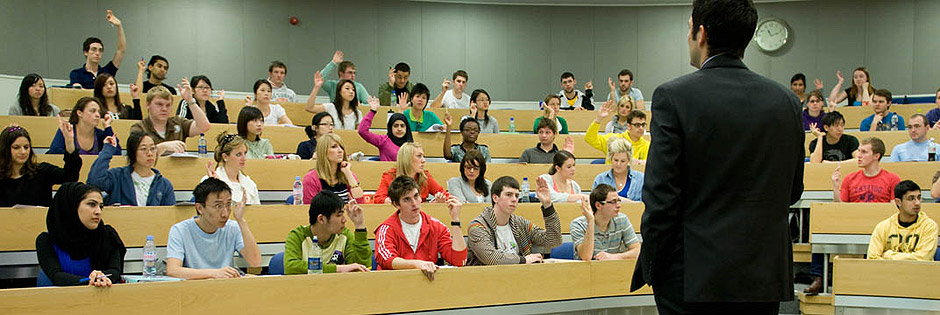
Student who study mathematics at university are very often seen as purely number crunchers however the truth about doing a maths degree is very different. While being very numerically capable is important in being a mathemtician it is just as important to be a very curious and logical problem solver.
It is a common misconception that a degree in mathematics leads only into a job as an accountant or a banker however the reality is much, much more varied. The skills you develop by doing a mathematics degree are applicable to many different careers. See the earlier brochure in the post post maths is everywhere to truly get a scale of the true impact mathematicians have on the modern world.
Wednesday, 17 April 2013
The most commonly used mathematics today
What is the most used piece of mathematics in the present day?
The answer is a cryptography technique used to keep all of the world's banking details secure.
The technique takes an input call it a and is for example your PIN and then puts it through a function which outputs a generator to the power of a modulo a large prime.
a->g^(a)
This function has the property that if you steal the data g^(a) it is very difficult to get the original a out. This is obviously a very useful property for protecting private information.
So when you input your PIN a, g^(a) is computed then this is compared to a stored list of g^(a) before access is given.
Sunday, 14 April 2013
Acapella maths puns
This very clever song has so many maths puns included there is almost one every other word. It is very catchy as well!
Watch the video on youtube here
Saturday, 13 April 2013
Horizon: Tomorrow's world
Horizon have produced yet another fascinating programme about current cutting edge technology and what potential this has for the future. It is well worth a watch for anyone interested in any form of science.
It is available on BBC's iplayer here
It is available on BBC's iplayer here
The bridges of Königsberg

Is it possible to start and end in the same place without crossing the same bridge twice?
The problem is based on the city of Königsberg, now known as Kaliningrad, in Russia. The question is: is it possible to start in one place (A,B,C or D) cross every bridge once and only once and end in the same place you started?
Thursday, 4 April 2013
Can mathematical models predict the future?
The BBC's Horizon has madea television programme on how using mathematical models on the large amounts of data now available can do incredible things such as:
- Predicting where and when crime will occur before it happens
- Mapping out the entire universe
- Financial formulas for scientifically predicting whether stock prices will go up or down rather than relying on gut feeling
- Using genetics (a vast data set) to predict and understand diseasesso they can be cured
Im figuratively drooling over the huge possibilites this kind of research has for the future.
Tuesday, 2 April 2013

Thursday, 28 March 2013
Fibonacci sequence
Fibonacci and the Golden ratio
A very famous sequence in mathematics is the Fibonacci sequence:
0,1,1,2,3,5,8,13,21,34,55,89,144,.....
The sequence was first published by Leonardo of Pisa, known as Fibonacci, in 1202.
Each term in this sequences arises from summing the two previous terms in the sequence with the first two elements of the sequence always defined as 0 and 1.
For example:
2 = 1 + 1
3 = 2 + 1
5 = 3 + 2
...
144 = 89 + 55
The sequence also has another special property which is that as the terms get bigger and bigger the last term divided by the one before gives an approximation of the Golden ratio.
The Golden ratio is roughly equal to: 1.618
We can see from the sequence above that the second term over the first gets closer and clser to this magic number:
21/13 = 1.61538
34/21 =1.619047
144/89 = 1.1617977 which is very close to the Golden ratio.
This ratio appears a lot in art, architecture and even music as it is meant to be a particularly pleasing ratio to look at or to hear.
Can Netflix save the film industry?
What can the film industry do to save itself from piracy?
Piracy has been a huge issue associated with the rise of the internet. With Napster it became very easy to download music files launching the music industry into chaos. If they could get their content online for free why would they buy a track legally again? But with the rise of services like itunes and spotify, offering cost effective legal alternatives, the industry has bounced back. Now its the film industry is in trouble can they learn some lessons from what happened with the music industry?I don't think the TV and film empires using their economic status to force the government to pass laws and close down websites, like what happened with pirate bay, is the right step forward. I think they instead need to be researching and inversting in a way to allow people to pay for a quick, easy and legal access to their content. This is where I think Netflix, and other similar services, could come in with their already large base of users. If the latest films were on these services at the same time as they came out on Blu-ray then they could persuade a lot of people from illegally downloading online onto the service and the films creator would get a share in the profits that they wouldn't of seen otherwise.
Also, they really need to recognise that it is no longer a viable option to release a show in the US months before it is released in other parts of the world. With the internet there is the possibility to watch it at the time that it is airing in the United States and a lot of people will watch the show illegally rather than wait months to watch it legally. Again an internet service like Netflix could help give a legal option and a chance for everyone to be happy they are not missing out.
Wednesday, 27 March 2013
I fucking love science

Described as "The lighter side of science" the blog I fucking love science has become very popular on facebook with over 4 million followers. It is great to see someone who is passionate about their subject create something so interesting it is read by so many people.
Find the facebook page here.
Tuesday, 26 March 2013
Cesar encryption
MBIZDYQBKZRI
One of the simplest forms of cryptography is Cesar encryption. This form of cryptographygets its name from Julius Cesar as it is said that the Roman emperor was the one who invented it.
The encryption involves using numbers to represent the 26 letters of the alphabet with 0-A, 1-B,...up to 25-Z.
A key is then chosen which is a number between 1 and 25. This is then added to the numeric version of the message if we want to encrypt the message or subtracted if we have a message we want to decrypt.
If the resulting number is less than 0, or more than 25, then 26 is added, or subtracted, respectively until the number is between 0 and 25. This is written as mod 26 but this just really means the remainder when divided by 26.
These numbers are then translated back into letters to form the encrypted message.
These numbers are then translated back into letters to form the encrypted message.
For example if I wanted to encrypt the word maths, using the key 5, this would be done by:
Text message: M A T H S
Numeric message: 12 0 19 7 18
Plus 5 mod 26
Encrypted numeric message: 17 5 24 12 23
Encrypted text message: R F Y M XFor an example of how to decrypt a message; to decrypt the title of this blog post using the key 10 would be done by:
Encrypted text message: M B I Z D Y Q B K Z R I
Encrypted numeric message: 12 1 8 25 3 24 16 1 10 25 17 8
Minus 10 mod 26
Decrypted numeric message: 2 17 24 15 19 14 6 17 0 15 7 24
Decrypted text message: C R Y P T O G R A P H Y
Can you decrypt the message R C S Q C A using this method with the key equal to 8?
Can you decrypt the message R C S Q C A using this method with the key equal to 8?
Wednesday, 20 March 2013
The internship

See the trailer for the new film the internship here
The fact that they are now making films based around Google shows how hugely important this company has become in our everyday lives.
Friday, 15 March 2013
Another logic puzzle
5 houses puzzle
There is a claim that less than 2% of the world's population can solve this intriguing
problem (with or without using a computer).
Can you?
1. There are five houses.
2. The Englishman lives in the red house.
3. The Spaniard owns the dog.
4. Coffee is drunk in the green house.
5. The Ukrainian drinks tea.
6. The green house is immediately to the right of the ivory house.
7. The Sun reader owns snails.
8. The Guardian is read in the yellow house.
9. Milk is drunk in the middle house.
10. The Norwegian lives in the first house.
11. The man who reads the Express lives in the house next to the man with the fox.
12. The Guardian is read in the house next to the house where the horse is kept.
13. The Mirror reader drinks orange juice.
14. The Japanese reads The Times.
15. The Norwegian lives next to the blue house.
Who drinks water? Who owns the zebra?
In the interest of clarity, it must be added that each of the five houses is painted
a different colour and is on one side of a straight road, and their inhabitants are
of different national extractions, own different pets, drink different beverages and
read different newspapers. One other thing, in statement 6, right means your right.
Thursday, 14 March 2013
Letter frequency analysis
etaoinsrhldcumfpgwybvkxjqz
What is letter frequency analysis?
It is the study of statistically how often each letter in the alphabet occurs in different languages.
The heading is the list (from left to right) of the most frequently occuring letters in the English language.
Find the list of frequencies of letters in dfferent languages (including klingon, naturally) here
What uses does this have?
This has applications in the mathematical field of cryptography as some encryptions can be broken by noticing that some letters occur more than others in certain languages. Then, using the frequency analysis statistics, you can discover the encryption key and then break the decrypt the message.
Wednesday, 13 March 2013
Monday, 11 March 2013
Maths is everywhere

A really interesting brochure about how much variety a degree in mathematics can have for your future career can be found here
Saturday, 9 March 2013
Learn to code for free

Havard lecturer David J. Malan (pictured above) has decided to put up some of his computer science lectures online freely available to everyone. He is a very intelligent and engaging speaker and watching these lectures would be a great way to get an introduction coding.
Watch the first episode here
Wednesday, 6 March 2013
Choose a door

What's the problem?
Suppose you are a contestant on a game show and you have to pick one of three doors. Behind two doors are goats (or anything else you don't want to receive) and behind the the other door is a car (or something else you want). You are asked to pick a door and you get to keep whatever is behind that door.
If you pick a door at random (call them door 1, door 2 and door 3) the laws of probability state you have a 1/3 chance of having picked the door with the car behind it.
Now suppose the game takes a turn. The game show host opens one of the two doors you didn't pick and shows you that there is a goat behind it. You are then given the option of changing your pick of doors.
If you pick a door at random (call them door 1, door 2 and door 3) the laws of probability state you have a 1/3 chance of having picked the door with the car behind it.
Now suppose the game takes a turn. The game show host opens one of the two doors you didn't pick and shows you that there is a goat behind it. You are then given the option of changing your pick of doors.
Should you switch?
Purely mathematically, the laws of probability state that you should swtich your choice of door.
Simple intuition may tell you that the new probabilities of the car being behind each door are 1/2 however this does not take into account the fact that the game show host has information that you do not-the position of the goats.
In mathematics the probability of winning the car if you stick with your original choice of door stays 1/3.
To see why switching is better consider the case when you have picked door 1:
Simple intuition may tell you that the new probabilities of the car being behind each door are 1/2 however this does not take into account the fact that the game show host has information that you do not-the position of the goats.
In mathematics the probability of winning the car if you stick with your original choice of door stays 1/3.
To see why switching is better consider the case when you have picked door 1:
- If the car is behind door 1; the host will open either door 2 or door 3 and reveal a goat and if you switch you will receive a goat.
- If the car is behind door 2; the host will open door 3 and show you a goat. You switch to door 2 and you win the car.
- If the car is behind door 3; the host will open door 2 and show you a goat you will switch and you will win the car.
Friday, 22 February 2013
Washbasin puzzle

You have a jug which will carry 7 litres of
water, and a washbasin which holds exactly 20 litres. By pouring the
contents of the jug into the basin, or by emptying the basin when it is
full.
How can we end up with exactly 4 litres of water in the washbasin?
Solution:
To end up with 4 litres in the washbasin you need to pour in 12 full jugs of water (84 litres in total) emptying the washbasin each time it gets full to capacity.
This is an example of a modular arithmetic problem and it is not a unique solution. Any multiple of 7 which has a remainder 4 when divided by 20 will also be a solution of the problem.
Wednesday, 20 February 2013
Steve Jobs speech

A really interesting speech from Steve Jobs from 1980 about the early days of Apple
Watch it here - link to youtube video
It is easy to critise Steve Jobs but it is undenaible that he was very, very passionate about his industry and was a fantasic and engaging speaker.
Saturday, 16 February 2013
What actually is a Google?

What does the name of the most popular search engine on the web actually mean?
The name is actually a misspelling of the word googol. A googol is the mathematical term for the number:
10,000,000,000,000,000,000,000,000,000,000,000,000,000,000,000,000,000,000,000,000,000,000,000,000,000,000,000,000,000,000,000,000,000
which is a 1 followed by 100 zeroes and as you can see is a very large number.
Though google has now become a noun in its own right the name remembers the company's academic roots at Stanford university.
Source: The Google Story, David A Vise
Friday, 15 February 2013
A logic puzzle
This isn't strictly a maths problem but I still found it fun!
1
1 1
2 1
1 2 1 1
1 1 1 2 2 1
What is the next line of the sequence?
Hints will be posted during the week and the solution posted this time next week.
Hint 1: Try saying each line out loud.
Hint 2: Each line relates to the one above.
Hints will be posted during the week and the solution posted this time next week.
Hint 1: Try saying each line out loud.
Hint 2: Each line relates to the one above.
Solution:
The next line should be: 3 1 2 2 1 1.
Each line describes in words the line above:
One,
One one,
Two ones,
One two, one one
One one, one two, two ones, one one
So the next line is:
Three ones, two twos, one one i.e 3 1 2 2 1 1
Source: The Google Story, David A Vise
Source: The Google Story, David A Vise
The oldest puzzle in history

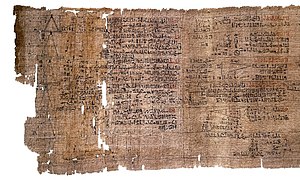
The problem is written on the Rhind papyrus, now housed in the British museum in London, and looks like this:

(For those of you who can't read hieratic, ancient Egyptian, writing) In english the problem reads:
- Houses 7
- Cats 49
- Mice 343
- Ears of wheat 2,401
- Hekats 16,807
What does this mean?
The writing alone does not provide many clues as to what the puzzle is. It was noticed that the numbers are 7, 7x7 = 49, 7x7x7 =343 etc. but again this did not provide many clues to the relation between the words and numbers.
It took a stroke of genius from someone studying the papyrus to make a connection between these numbers and the well known riddle "As I was going to St Ives".
- As I was going to St Ives
- I met a man with seven wives
- Every wife had seven sacks
- Every sack had seven cats
- Every cat had seven kits
- Kits, cats, sacks, wives.
- How many were going to St Ives?
- However in the ancient Egyptian case the puzzle would read: Seven houses each contains
seven cats. If each cat catches seven mice and if each mouse eats 7 ears of wheat. If sown each ear of wheat would have produced 7 hekats of wheat.
Why is this particular problem important?
This problem is massively important as it is the first recorded example in history of people doing mathematics for recreational purposes. It shows that even 3000 years ago there were people curious about maths and wanted to test their intellect by setting others these sort of riddles.
It is fascinating to think that some of the mathematical puzzles humans complete everyday, for example sudokus, could be studied by future historians in the same way as we study this problem from the past.
It is fascinating to think that some of the mathematical puzzles humans complete everyday, for example sudokus, could be studied by future historians in the same way as we study this problem from the past.
Sunday, 10 February 2013
What next for the Apple?

Apple have built a worldwide reputation for producing hugely iconic and stylish products. The company is also famous for its counter culture spirit.
I found the biography of Apple's talismanic leader Steve Jobs inspiring. It is easy see how he led Apple from the brink of collapse to the most valuable and one of the most influencial companies in the world.
The question is what comes next for Apple?
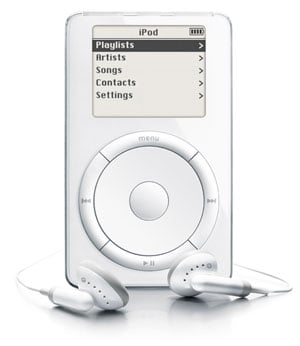
Since the launch of the original iPod in 2001, Jobs launched a string of hugely successful products which revolutionised many different industries. It comes as no surprise that since his death Apple have only evolved these existing products rather than take a bold step into a new area.
Can Apple sustain their dominance?
While the sales of the iPad are hugely impressive they will inevitably slow down overtime. Jobs understood the need for bold innovation to keep Apple on top. Apple have been lucky so far that Microsoft's entrance into the tablet market was a below par product that is unlikely to convince users to swap their iPads for a Microsoft tablet.
A possible iWatch?
I read that it is likely Apple's new innovation may be a watch that will link with a users iPhone or other Apple product to provide the users with features like answering their iPhone and showing texts and reminders possibly using siri to issue commands. While this seems like a useful accessory for your existing Apple products it is hardly as ground breaking as the iPod, iPhone or iPad.
Apple could also be too late getting their product to market with products like the pebble already becoming available and looking like a viable contender containing all the features Apple could put into their product.
As a fan of the unique user experience Apple products offer I hope Apple can rediscover some of the innovative development they possessed with Steve Jobs at the helm.
However, Apple have done this before. For example, there existed other mp3 players before the iPod. Apple took this technology and developed a user friendly and stylish product far superior to everything else on the market.
Saturday, 9 February 2013
How likely actually is it that you will win the lottery?

The fact that you are more likely to get struck by lightning than win the lottery is often told to hopeful lottery players.
How likely is it that your numbers will come up in the lottery?
This can be figured out mathematically by calculating how many possible ways there are of choosing 6 numbers from 49. Without replacing each number after it has been picked.
To do this we use the "nCr"-(number of ways of choosing r items from n) button on a standard calculator. (This uses a more complicated mathematical formula using factorials).
Entering 49C6 you are told there are:
13,983,816 possibilities.
In other words, each set of 6 numbers has about a one in 14 million chance of coming up; not very likely!
Comparitively the chances of being struck by lightning in your lifetime are roughly 1 in 10,000!
So you are over 100 times more likely to be struck by lightning than win the lottery!
Comparitively the chances of being struck by lightning in your lifetime are roughly 1 in 10,000!
So you are over 100 times more likely to be struck by lightning than win the lottery!
Wednesday, 6 February 2013
Card shuffling

Card games and probability are two concepts that go hand in hand
What is the probability that a deck of cards will end up in a specific order after they are shuffled?
To obtain the answer, consider a standard deck of 52 cards and how many choices you have for each position in the deck.
For the first card there are 52 choices (all the cards). Then for the second card, there are 51 choices for each of the 52 choices for the first card (the deck minus the one we know comes first). We then have 50 choices for third and so on.
This produces the solution:
52 x 51 x 50 x 49 x ... x 2 x 1
=8.0658175 x 10^67
And thus the probability of the deck being in a specific order is roughly 1 / (8 x10^67).
And thus the probability of the deck being in a specific order is roughly 1 / (8 x10^67).
This number is so astronomically large that every time you randomly shuffle a deck of card it will be the first time in history that there has been a deck of cards in that order!
Subscribe to:
Posts (Atom)